
When to Send Graduation Invitations So Guests Actually Show Up
Most graduation parties don’t fail because of the venue, the food, or the decorations. They fail because of timing.
If you’re wondering when to send graduation invitations, you’re asking the right question. I’ve seen the same issues come up again and again when planning graduation events throughout the years.
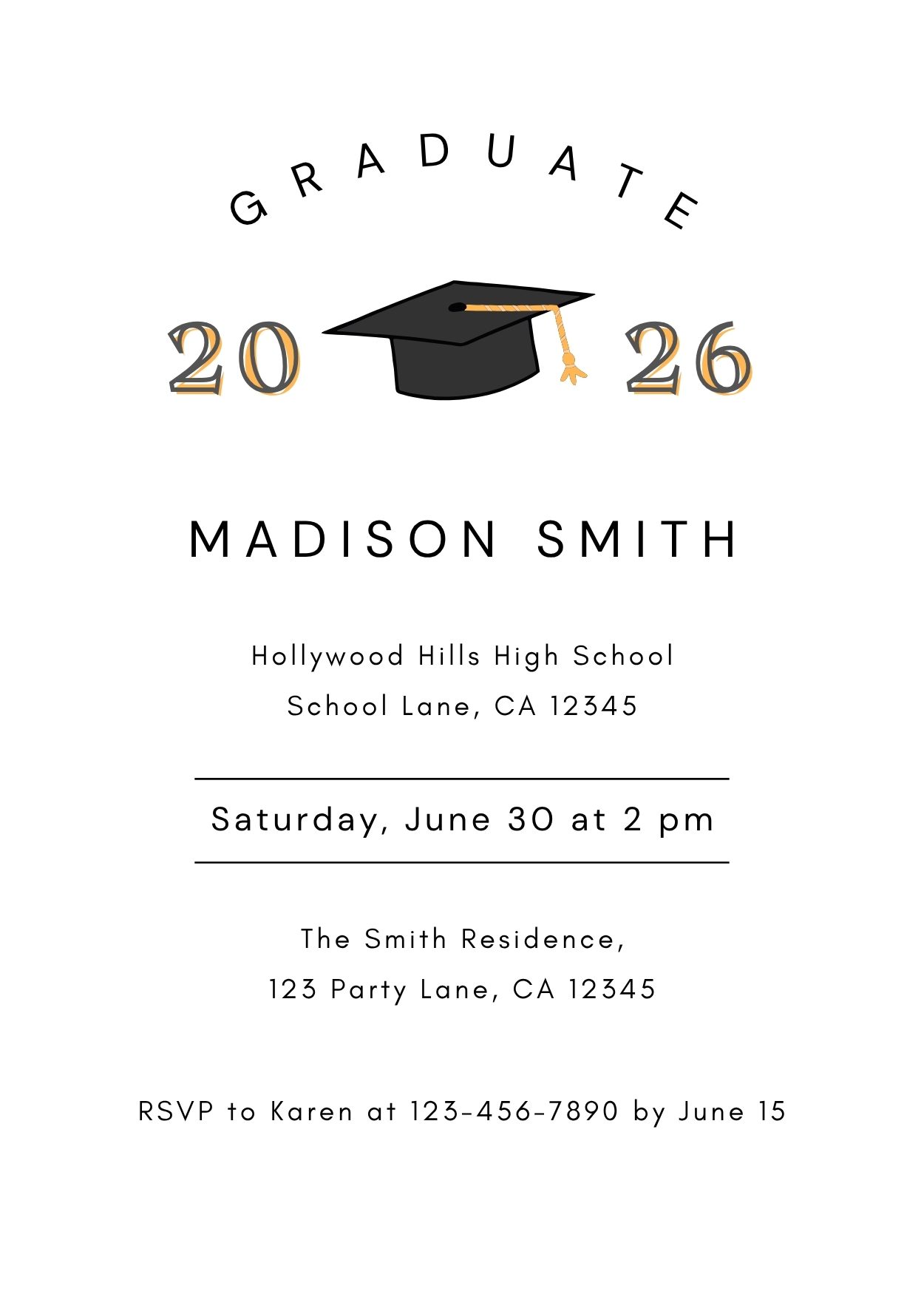
Table of contents
- Why Timing Matters When Sending Graduation Invitations
- Graduation Invitation Timeline: When to Send Invitations at a Glance
- When to Send Graduation Invitations Based on Event Type
- Key Factors That Affect When to Send Graduation Invitations
- When to Ask for RSVPs for Graduation Invitations
- Common Graduation Invitation Timing Mistakes to Avoid
- Digital vs Printed Graduation Invitations: Does Timing Change?
- Graduation Invitation Timeline Checklist for Easy Planning
- Get Your Free Graduation Invitation Template
- FAQs About When to Send Graduation Invitations
Invitations go out too late, RSVPs trickle in too slowly, and suddenly everything, from catering to seating, becomes harder than it needs to be.
The truth is simple. Your graduation invitation timeline directly impacts attendance, planning, and overall stress. Graduation season is packed. Between ceremonies, travel, and overlapping parties, your guests are making decisions weeks in advance.
If your invitation arrives after those plans are set, attendance drops, even with close friends and family. In this guide, you’ll learn exactly when to send graduation invitations, how to structure your graduation party planning timeline, and how to avoid the most common timing mistakes.
Why Timing Matters When Sending Graduation Invitations
Most graduation advice focuses on invitation design, wording, or etiquette. In practice, those details matter far less than timing.
When you send out your invitations determines who can actually attend.
From planning graduation events and reviewing invitation timelines, I’ve seen the same pattern repeat. Guests rarely miss events because they are not interested. They miss them because their schedules are already full.
Graduation season, especially in May and June, is one of the busiest times of the year for families. Guests are often juggling:
- Multiple ceremonies
- Overlapping graduation parties
- Travel commitments
By the time many invitations arrive, those decisions have already been made.
If you are unsure when to send graduation invitations, the key principle is simple. People commit to their schedules earlier than most hosts expect.
Sending your invitations within the right window gives your event a real chance to be prioritized instead of being squeezed in at the last minute.
It Gives You Time for RSVPs and Planning
A strong graduation invitation timeline doesn’t just help your guests plan. It gives you control over your RSVPs, budget, and the entire flow of your event.
Every RSVP affects decisions like:
- How much food to order
- How many tables or chairs you need
- How much you’ll spend overall
I’ve seen events where invitations went out late, and hosts had to guess attendance. That usually leads to one of two outcomes. Overspending or running short.
A clear timeline removes that guesswork.
It Helps You Avoid Last-Minute Stress
This is where timing makes the biggest difference.
When invitations go out early:
- RSVPs come in gradually
- Adjustments happen in real time
- Planning feels manageable
When they go out late:
- Everything compresses
- Follow-ups become urgent
- Stress spikes quickly
A better way to think about it is this. Your invitation timing sets the pace for your entire graduation party planning timeline.
Most people worry about sending invitations too early.
In reality, the far more common and costly mistake is sending them too late.
Graduation Invitation Timeline: When to Send Invitations at a Glance
If you’re looking for a quick, reliable answer to when to send graduation invitations, this timeline will keep you on track.
Based on what I’ve seen consistently work across different types of events, this structure gives you enough time to plan without dragging things out too early.
Ideal Graduation Invitation Timeline
- 8 to 10 weeks before graduation: Finalize your guest list
- 6 to 8 weeks before: Send graduation invitations
- 3 to 4 weeks before: Track RSVPs and adjust plans
- 1 to 2 weeks before: Follow up with guests who haven’t responded
This timeline works because it aligns with how people actually plan their schedules, especially during a busy graduation season.
Why This Timeline Works in Practice
A lot of generic advice gives timelines without explaining the reasoning. Here’s the practical breakdown.
8 to 10 weeks before:
This is when you lock in your guest list. From experience, this step often takes longer than expected. You’re coordinating family, friends, plus-ones, and sometimes out-of-town guests. Finalizing early prevents delays later in your graduation party planning timeline.
6 to 8 weeks before:
This is the ideal time to send invitations. It gives guests enough notice to plan, especially if they need to travel. If you’re wondering when to mail graduation announcements, this is also a good point to start preparing them.
3 to 4 weeks before:
By now, RSVPs should be coming in. This is when you start tracking responses and making adjustments to food, seating, and logistics.
1 to 2 weeks before:
Follow-ups matter more than people expect. A simple reminder can significantly increase your final attendance count.
Tip: If you’re deciding between sending invitations early or waiting, choose early.
In nearly every case I’ve seen, earlier invitations lead to:
- Higher attendance
- More reliable RSVPs
- Less stress during the final weeks
Waiting too long creates pressure that’s hard to fix later.
A clear graduation invitation timeline is not just about organization. It directly affects how many people show up and how smoothly your event runs.
When to Send Graduation Invitations Based on Event Type
Not all graduation-related mail follows the same rules. One of the biggest mistakes I see is people treating invitations, announcements, and ceremony details the same way.
They are not.
If you want to get timing right, you need to match your approach to the type of event or communication. This is where your graduation invitation timeline becomes more specific and effective.
When to Send Graduation Ceremony Invitations
For most students, graduation ceremony tickets or invitations are distributed through the school. That part is usually handled for you.
Where timing becomes your responsibility is with extended communication.
You may still need to:
- Notify family members about ceremony details
- Send extra invitations to close friends
- Clarify ticket limits or seating arrangements
From experience, families often underestimate how early relatives start planning for ceremonies, especially if travel is involved.
Best timing: Send any additional ceremony-related invitations or details 6 to 8 weeks before the event.
This gives guests enough time to:
- Request time off
- Book travel
- Coordinate schedules
If you wait too long, even close family members may struggle to attend.
When to Send Graduation Party Invitations
This is where most of your planning effort will go, and where timing matters the most.
If you are hosting a party, your graduation party planning timeline should be based on your invitation schedule.
Ideal window: Send graduation party invitations 4 to 6 weeks before the event
This gives guests enough notice without overwhelming them too early.
When You Should Send Invitations Earlier
In some situations, the standard timeline is not enough.
You should send invitations closer to 6 to 8 weeks in advance if:
- You are hosting a large party
- Many guests are traveling
- Your event falls on a busy graduation weekend
- Your venue has strict capacity limits
I’ve seen large graduation parties lose attendance simply because invitations were sent at the 3-week mark. By then, most weekends were already booked.
Earlier timing gives your event a better chance to be prioritized.
When to Mail Graduation Announcements (No Party)
Graduation announcements follow a completely different purpose.
They are not invitations.
They are meant to:
- Share your achievement
- inform extended friends, relatives, and professional contacts
- Celebrate the milestone without expecting attendance
Because of this, the timing is more flexible.
Best timing:
Send announcements within 2 weeks before or after graduation
If you are wondering when to mail graduation announcements, this window works well because:
- It keeps the news timely
- It aligns with when people expect graduation updates
- It avoids confusion about whether an RSVP is required
Here is the simplest way to avoid confusion:
- Invitations ask people to attend an event and require RSVPs
- Announcements share news and do not require a response
Mixing these up is one of the most common etiquette mistakes, and it can lead to awkward situations or missed expectations.
Quick Takeaway
The answer to when to send graduation invitations depends on what you are sending.
- Ceremony details: 6 to 8 weeks before
- Party invitations: 4 to 6 weeks before
- Announcements: within 2 weeks of graduation
Adjusting your timing based on the event type makes your overall graduation invitation timeline much more effective.
Key Factors That Affect When to Send Graduation Invitations
A standard graduation invitation timeline works for most situations, but in practice, timing is rarely one-size-fits-all.
From what I’ve seen across different events, the right answer to when to send graduation invitations often depends on a few key variables. Ignoring these can lead to lower attendance or unnecessary stress, even if you follow a general timeline.
Here’s how to think about the factors that actually change your timing decisions.
Graduation Season Timing (May and June Planning)
Graduation season is highly concentrated, especially in May and June.
During this period, most families are managing multiple commitments at once. It’s common for guests to receive several invitations within the same few weeks. That creates competition for time and attention.
In practice, this means your timing needs to work harder.
If your event falls in peak graduation season, sending invitations earlier within your graduation invitation timeline increases the chances that guests will:
- Notice your event sooner
- Reserve the date before their calendar fills up
Waiting too long during a busy season is one of the main reasons attendance drops, even for well-planned events.
Guest Travel and Out-of-Town Planning
Travel is one of the biggest variables that affects when to send graduation invitations.
If even a portion of your guest list needs to:
- Book flights
- Arrange accommodations
- Request time off work
Then your timeline needs to shift earlier.
From experience, guests who need to travel often make decisions several weeks in advance. If your invitation arrives after they have already committed to other plans, attendance becomes unlikely.
A safer approach is to treat travel-heavy events differently.
In those cases, sending invitations closer to 6 to 8 weeks ahead of time, or even earlier, gives people a realistic chance to attend.
Venue Size and Guest Capacity Considerations
Your venue directly impacts how precise your planning needs to be.
Smaller or more formal venues require a tighter guest count. That means your RSVP process needs to be more reliable, which starts when you send invitations.
If your space is limited, earlier invitations help you:
- Confirm attendance sooner
- Manage capacity more effectively
- Avoid last-minute overbooking issues
I’ve seen situations where late invitations led to unclear guest counts, which forced hosts to either turn people away or scramble for extra space.
A well-timed graduation party planning timeline prevents that.
Graduation Party Type and Event Formality
Not all graduation parties require the same level of planning.
A casual backyard gathering gives you more flexibility. Guests can come and go, and exact numbers are less critical.
A more formal event is different.
If your party includes:
- Catering
- Assigned seating
- Rented venues
- Scheduled activities
Then your timeline needs to be more structured.
In these cases, sending invitations earlier supports better planning and more accurate RSVPs.
The more structured your event is, the less room you have for timing mistakes.
How These Factors Work Together
Most people look for a single answer to when to send graduation invitations, but the better approach is to adjust based on your situation.
For example:
- A small, casual party with local guests can follow a standard 4 to 6 week timeline
- A large event with traveling guests should lean toward 6 to 8 weeks or more
Thinking this way makes your graduation invitation timeline more flexible and realistic.
Practical Takeaway
Timing is not just about following a checklist. It is about understanding what your guests need in order to attend.
If your event involves travel, a busy season, or a structured setup, sending invitations earlier will almost always lead to better results.
When to Ask for RSVPs for Graduation Invitations
Knowing when to send graduation invitations is only part of the process. The next critical step is deciding when you want responses back.
From experience, this is where many graduation party planning timelines start to break down. Invitations go out on time, but RSVP deadlines are either unclear or too close to the event, which creates unnecessary stress.
A clear RSVP strategy keeps everything else under control.
Ideal RSVP Deadline for Graduation Parties
The most reliable approach is to set your RSVP deadline 2 to 3 weeks before your event.
This window gives you enough time to:
- Finalize food and drink quantities
- Confirm seating and layout
- Adjust your budget based on actual attendance
If you push the deadline too close to the event, you lose flexibility. If you set it too early, guests may not be ready to commit.
In practice, the 2- to 3-week mark strikes the right balance.
Why RSVP Timing Impacts Planning and Budget
RSVPs are not just about knowing who is coming. They directly impact nearly every planning decision.
Here’s what I’ve seen happen when RSVP timing is off.
If responses come in too late:
- Catering orders become rushed or inaccurate
- Seating arrangements feel last-minute
- Costs increase due to quick changes
If responses come in on time:
- Planning becomes predictable
- Adjustments are manageable
- The event feels organized instead of reactive
Your RSVP deadline is what turns your graduation invitation timeline into something you can actually execute.
How to Set Up Your RSVP Process
A strong RSVP process starts with clear communication.
Make sure your invitation includes:
- A specific RSVP deadline
- Simple instructions on how to respond
- One clear method of contact or response
If you are sending digital invitations, tracking responses is easier. If you are mailing invitations, give guests enough time to reply, especially when considering mailing delays.
This is where timing overlaps with when to mail graduation announcements and invitations, since physical delivery can affect how quickly guests respond.
How to Track and Follow Up on Graduation RSVPs
Even with a clear deadline, not everyone will respond on time.
From experience, follow-ups are essential if you want an accurate final count.
Plan to:
- Check responses about 1 to 2 weeks before the event
- send a quick reminder to anyone who has not replied
A simple message is enough. Most people are not ignoring the invitation, they just forgot to respond.
Following up can noticeably increase your final attendance numbers and reduce uncertainty.
Practical Takeaway
Setting the right RSVP deadline is just as important as knowing when to send graduation invitations.
If your goal is a smooth, well-planned event, aim for:
- invitations sent 4 to 8 weeks in advance
- RSVP deadline set 2 to 3 weeks before
- follow-ups handled 1 to 2 weeks before the event
This structure keeps your graduation party planning timeline organized and predictable.
Common Graduation Invitation Timing Mistakes to Avoid
Even if you understand the general graduation invitation timeline, a few common mistakes can still cause problems.
From experience, these issues tend to show up again and again, especially when people underestimate how important timing really is. The good news is they are all preventable once you know what to look for.
Sending Graduation Invitations Too Late
This is by far the most common mistake.
People often delay sending invitations because they are waiting on small details, like final plans, decorations, or menu decisions. In the process, they push past the ideal window for sending graduation invitations.
The result is predictable:
- guests already have plans
- attendance drops
- more last-minute declines
I’ve seen well-planned parties end up half full simply because invitations went out two to three weeks before the event. By then, most weekends during graduation season are already booked.
A better approach is to send invitations once the key details are set, even if everything is not perfect.
Forgetting to Include an RSVP Deadline
An invitation without a clear RSVP deadline creates confusion.
Guests may intend to respond but delay it, especially if there is no sense of urgency. This leads to incomplete guest counts and uncertainty as the event approaches.
From a planning perspective, this is one of the easiest mistakes to fix.
Every invitation should clearly state:
- The RSVP deadline
- How to respond
- Who to contact
This keeps your graduation party planning timeline structured and predictable.
Not Accounting for Mailing Time
This mistake often gets overlooked, especially with printed invitations.
When people think about when to send graduation invitations, they sometimes forget that mailing takes time. Between printing, addressing, and delivery, several days can pass before guests even see the invitation.
If you don’t account for this:
- Your timeline gets compressed
- Guests have less time to respond
- RSVP deadlines feel rushed
A practical rule is to add a 5 to 7-day buffer when sending physical invitations. This ensures your timeline continues to work as intended.
Confusing Graduation Invitations vs Announcements
This is more common than most people expect.
Graduation announcements and invitations serve different purposes, but they are often sent around the same time. Without clear wording, guests may not know whether they are being invited or simply informed.
This can lead to:
- Missed RSVPs
- Guests assume they are invited when they are not
- Awkward follow-up conversations
If you are deciding when to mail graduation announcements, keep in mind that announcements do not require a response. Invitations do.
Being clear about this distinction helps avoid confusion and keeps expectations aligned.
Not Following Up on RSVPs
Even with a clear RSVP deadline, some guests will not respond on time.
This is normal, but it becomes a problem if you rely only on incoming responses without follow-up.
From experience, a simple reminder can make a big difference.
If you skip this step:
- Your final guest count may be inaccurate
- Planning decisions become harder
- Last-minute surprises increase
Following up 1 to 2 weeks before the event helps finalize your numbers and keeps your graduation invitation timeline on track.
Digital vs Printed Graduation Invitations: Does Timing Change?
The short answer is yes, but not in the way most people expect.
From planning graduation events and reviewing invitation timelines, I’ve seen many people assume that digital invitations allow them to send everything later. In reality, the core rule behind when to send graduation invitations does not change. Guests still need time to plan, coordinate schedules, and commit to attending.
What changes is the margin for error in your graduation invitation timeline.
When to Send Digital Graduation Invitations
Digital invitations are faster, easier to manage, and increasingly common for graduation parties.
You can:
- Send them instantly
- Track RSVPs automatically
- Update details without reprinting
Because of this, many people ask whether they can send digital graduation invitations closer to the event.
Technically, you can. But in practice, this often leads to lower attendance.
In several graduation party planning timelines I’ve worked through, late digital invites resulted in more “I wish I could make it” responses. The issue was not the format. It was the timing. Guests had already committed to other events.
A better way to think about it is this. Speed does not replace notice.
Even with digital delivery, your guests still need the same planning window. That means you should aim to send digital invitations:
- Around 4 to 6 weeks before the event for most parties
- Closer to 6 to 8 weeks if guests are traveling or the event is large
This keeps your timeline aligned with how people actually make decisions.
When to Send Printed Graduation Invitations
Printed invitations introduce a different challenge. They require more steps, and each step adds time.
You need to account for:
- Design and ordering
- Printing turnaround
- Addressing and preparation
- Mailing and delivery
From experience, this is where timelines slip the most. People plan to send invitations six weeks in advance, but delays in printing or mailing push delivery closer to four weeks or less.
That shift has a direct impact on RSVPs and attendance.
If you are planning to send printed invitations, the safest approach is to build extra time into your graduation invitation timeline.
A practical approach is to:
- Begin the process earlier than your target send date
- Allow at least 5 to 7 days for mailing
- Expect minor delays and plan for them
The same logic applies when deciding when to mail graduation announcements. Physical delivery always requires additional buffer time.
Choosing Between Digital and Printed Invitations
Both digital and printed invitations can work well. The difference comes down to how well your timing supports your guests.
From what I’ve seen, the most successful events follow a consistent pattern:
- Invitations are sent early enough to give guests real planning time
- RSVP tracking is simple and clear
- Follow-ups happen before the final planning stage
Digital invitations make tracking easier. Printed invitations add a more formal feel. Neither option fixes poor timing.
Practical Takeaway
Your invitation format affects your process, not your strategy.
If you are trying to decide when to send graduation invitations, focus on giving your guests enough notice first. Then choose the format that fits your style and event.
A strong graduation invitation timeline, supported by the right delivery method, leads to better attendance and a smoother planning experience.
Graduation Invitation Timeline Checklist for Easy Planning
If you want a simple way to stay on track, this checklist breaks the entire process into clear, manageable steps.
From experience, the biggest issue with graduation planning is not knowing what to do next or when to do it. A structured checklist removes that uncertainty and keeps your graduation invitation timeline moving forward without last-minute stress.
Step-by-Step Graduation Invitation Checklist
Follow this sequence to stay organized and avoid common timing mistakes.
1. Finalize your guest list (8 to 10 weeks before)
Start by confirming who you plan to invite. This includes:
- Close family
- Friends
- Extended relatives
- Anyone who may need to travel
This step often takes longer than expected. I’ve seen timelines delayed simply because the guest list was not finalized early enough. Locking this in first keeps everything else on schedule.
2. Order or create your invitations (7 to 8 weeks before)
Once your guest list is ready, move into designing or ordering invitations.
If you are using printed invitations, build in extra time for:
- Design revisions
- Printing delays
- Shipping to your home
If you are using digital invitations, this step is faster, but you should still finalize details early so you are ready to send on time.
3. Send graduation invitations (6 to 8 weeks before)
This is the key step in your timeline.
If you are unsure when to send graduation invitations, this window works for most events. It gives guests enough notice to plan while keeping your event relevant.
If your event involves travel or falls during a busy graduation weekend, aim for the earlier side of this range.
4. Send graduation announcements if needed
If you are also planning announcements, this is a separate step.
When deciding when to mail graduation announcements, you can send them:
- About 2 weeks before graduation
- Or shortly after the event
Since announcements do not require RSVPs, they are more flexible and do not need to follow the same timeline as invitations.
5. Track RSVPs (3 to 4 weeks before)
As responses come in, start organizing your guest count.
This is where your graduation party planning timeline becomes more concrete. You can begin estimating:
- Food and drink needs
- Seating arrangements
- Overall event size
Tracking early helps you avoid last-minute surprises.
6. Follow up with guests (1 to 2 weeks before)
Not everyone will respond by the deadline.
From experience, this step is essential. A quick follow-up message can significantly improve your final attendance count.
Reach out to anyone who has not responded and confirm whether they plan to attend.
7. Finalize event details (1 week before)
Once RSVPs are confirmed, finalize:
- Catering or food plans
- Seating layout
- Supplies and setup
At this stage, your numbers should be stable, which makes planning much easier.
If you follow this checklist, your graduation invitation timeline will stay on track from start to finish.
The key is not just knowing what to do, but doing each step at the right time.
When to Send Graduation Invitations for the Best Results
If you’re still deciding when to send graduation invitations, the most reliable approach is simple. Send them earlier than you think you need to.
A clear graduation invitation timeline gives your guests time to plan, improves attendance, and makes your entire graduation party planning timeline easier to manage. When invitations go out late, RSVPs become unpredictable, and planning becomes stressful. When they go out on time, everything from food to seating becomes easier to organize.
For most events, the best approach is to:
- Send graduation invitations 4 to 8 weeks in advance
- Set RSVP deadlines 2 to 3 weeks before the event
- Follow up to confirm your final guest count
If you’re also planning announcements, knowing when to mail graduation announcements helps you keep communication clear without confusion around RSVPs.
From everything I’ve seen, the graduation parties that run the smoothest are not the most elaborate. They are the ones planned early, with a clear timeline and realistic expectations.
If you’re ready to get started, you can use a free graduation invitation printable template to quickly create and send your invitations without overthinking the design.
Start early, follow a clear timeline, and you’ll spend less time managing details and more time enjoying the celebration.
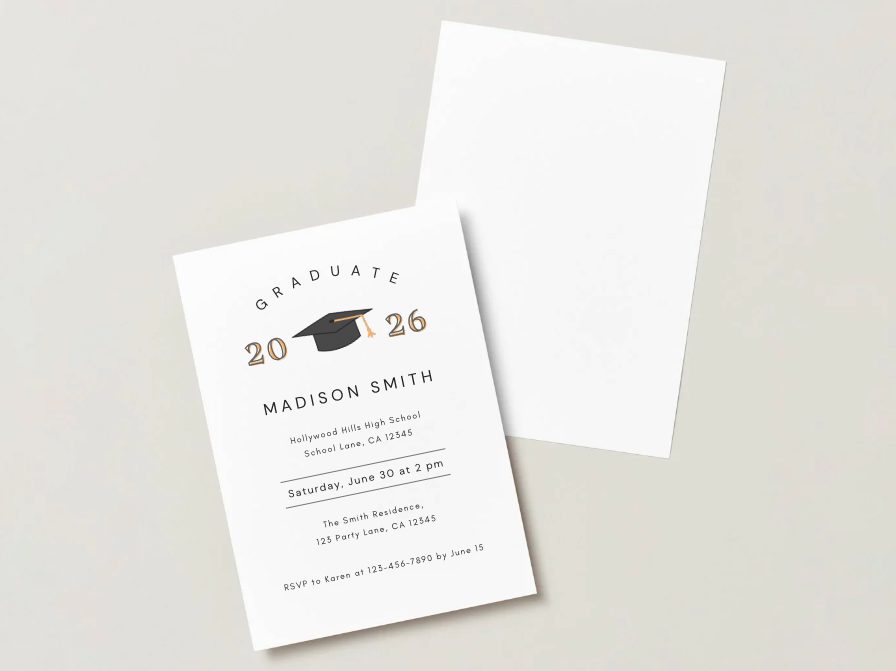
Get Your Free Graduation Invitation Template
Skip the stress of designing from scratch. Get a free graduation invitation printable and create a clean, professional invite in just a few minutes.
FAQs About When to Send Graduation Invitations
These are some of the most common questions people ask when planning their graduation invitation timeline. Answering them clearly helps avoid confusion and improves your overall planning process.
In most cases, no. From experience, people are far more likely to send invitations too late than too early. Sending invitations within the 6 to 8 week window gives guests enough time to plan, especially during a busy graduation season. The only time sending too early becomes an issue is when your event details are not finalized. If the date, time, or location might change, it is better to wait until those details are confirmed. Otherwise, earlier timing usually leads to better attendance and more reliable RSVPs.
You can, but it usually does not work well. Even though digital invitations are delivered instantly, your guests still need time to adjust their schedules. Sending invitations too close to the event often results in lower attendance because people already have plans.
In several graduation party planning timelines I’ve seen, last-minute digital invites led to more declines, not because people were unavailable in general, but because their calendars were already full. A better approach is to treat digital invitations the same as printed ones and send them at least 4 to 6 weeks in advance.
No, they do not. Graduation announcements are meant to share your achievement, not invite guests to an event. Because of that, they do not include RSVP requests. If you are deciding when to mail graduation announcements, timing is more flexible. Sending them within a couple of weeks before or after graduation keeps the news timely without creating confusion. The key is to make sure your wording is clear so recipients understand that no response is expected.
Don’t Miss These Graduation Party Ideas:
Meet the Author
Cristy Posten is a party stylist, entertaining expert, and founder of Pretty My Party, with over a decade of experience helping readers make life’s biggest milestones truly special. She shares creative ideas for parties, holidays, and everyday celebrations, all designed to inspire and make hosting feel fun, beautiful, and stress-free.
