
13 Fun Drinking Party Games With Easy Rules
The snacks are out, the playlist is on, and everyone’s waiting for someone else to suggest a game. You don’t need a cabinet full of supplies to get things moving. Some of the most fun drinking party games start with a good question, a deck of cards, or a few plastic cups.
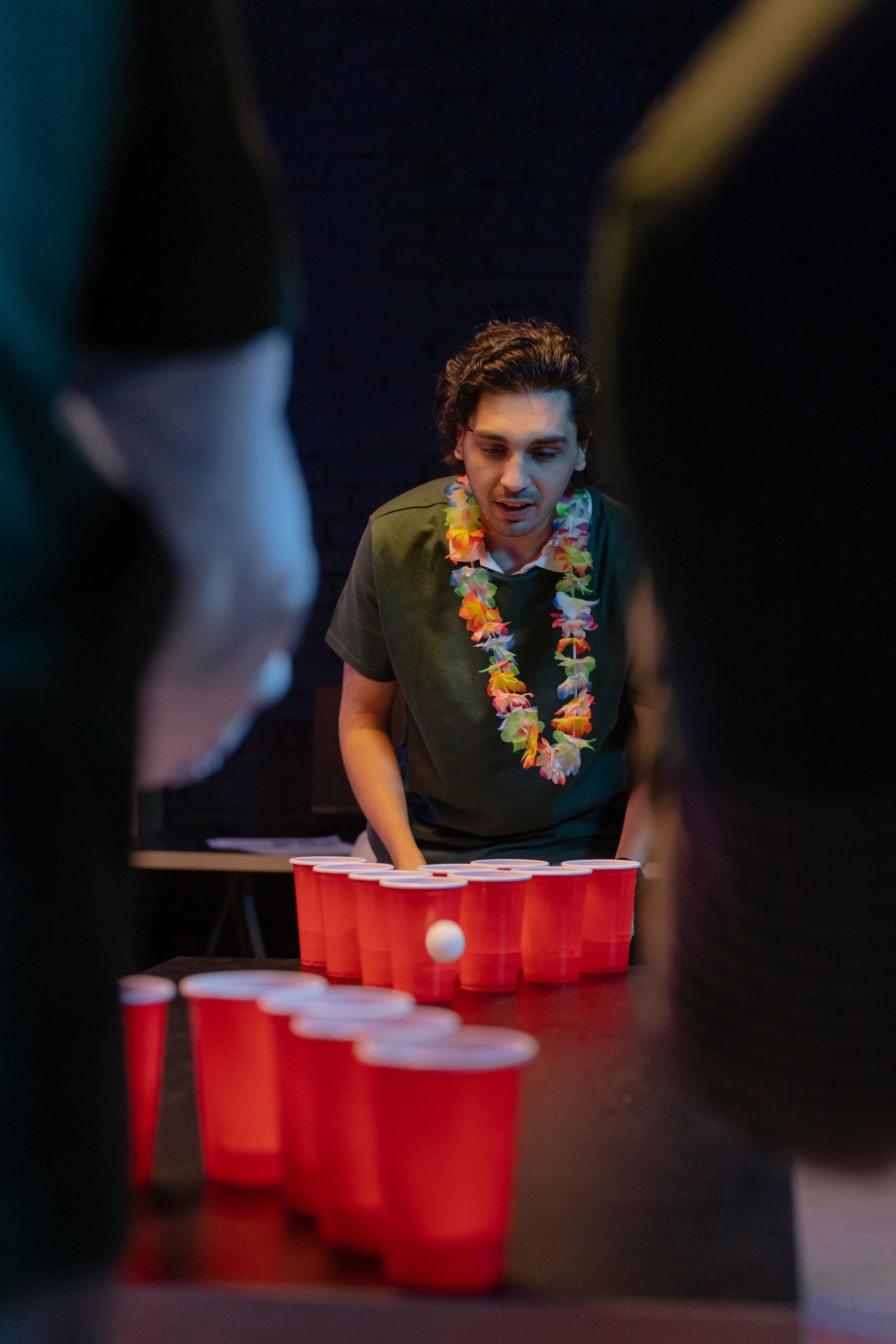
For a quick start, choose Never Have I Ever for conversation, Higher or Lower for a small group, or Beer Pong for a little friendly competition. The best fit depends on how many people are playing, how much space you have, and whether your guests already know each other.
Below, you’ll find 13 fun games with supplies, playable rules, and a clear stopping point. Use these simple house versions as written, or agree on changes before the first round.

Choose a game that fits your group
These player ranges are practical recommendations for the versions below, rather than official limits.
| Game | Suggested players | What you need |
|---|---|---|
| Never Have I Ever | 3–10 | Nothing |
| Most Likely To | 4–12 | Nothing |
| Categories | 3–10 | Nothing |
| Two Truths and a Lie | 2–10 | Nothing |
| Medusa | 4–12 | Nothing |
| Truth or Drink | 2–8 | Questions |
| Higher or Lower | 2–6 | Playing cards |
| King’s Cup | 4–10 | Playing cards and rule sheet |
| Beer Pong | 2 or 4 per table | Cups, balls, water and a table |
| Flip Cup | 6–12 | Empty plastic cups and a table |
| Name That Tune | 4–16 | Playlist, speaker, paper and pens |
| Who Said It? | 4–12 | Paper, pens and a bowl |
| Draw and Guess | 4–12 | Paper, markers, prompts and a timer |
Set the house rules before you start
These games are intended for adults 21 and older. Every drink cue below is optional: take a sip of your chosen drink, use a nonalcoholic drink, or skip it without a penalty. Keep scoring separate from drinking so everyone can participate on equal terms.
Put out water and a nonalcoholic option, like this raspberry lemon lime mocktail. Let guests pass on personal questions, and agree that no one assigns shots, demands a finished drink, or races to consume alcohol.
Drinking too much too quickly can cause alcohol overdose, according to the National Institute on Alcohol Abuse and Alcoholism. Game results don’t set anyone’s drinking pace. Arrange a sober ride before the party.

Fun drinking party games without cards or equipment
1. Never Have I Ever
Best for: Getting conversation going without putting one person in the spotlight for long.
Everyone holds up five fingers. Going clockwise, each person finishes the sentence “Never have I ever…” with something they haven’t done.
Anyone who has done it lowers one finger and gets an optional sip cue. Keep playing until someone lowers their fifth finger, then end the round. Everyone can rejoin a fresh round.
Start with prompts that invite a story:
- Never have I ever sent a text to the wrong group chat.
- Never have I ever accidentally worn something inside out all day.
- Never have I ever missed my stop because I was distracted.
Keep the first round light. Guests can volunteer the details rather than being questioned about them.
2. Most Likely To
Best for: Friends who know each other well enough to enjoy a playful callout.
One person asks, “Who’s most likely to…?” On the count of three, everyone points to someone else in the circle.
The person with the most votes receives one point and an optional sip cue—not one cue per vote. Tied players each receive one point. After 10 prompts, the highest score earns the unofficial “most likely” title; ties share it.
Try these:
- Who’s most likely to turn a quick errand into an all-day outing?
- Who’s most likely to know every word to a song from 2005?
- Who’s most likely to bring a backup outfit?
Choose funny habits over sensitive subjects. “Most likely to lose their keys” lands differently from a question about someone’s relationship.
3. Categories
Best for: A seated group that wants quick turns.
Choose a category, like pizza toppings, movie villains, or things you pack for a beach trip. Go around the circle naming one item at a time.
Repeating an answer, giving an answer outside the category, or taking longer than five seconds ends the round. That player receives an optional sip cue and chooses the next category.
Play five categories, with everyone returning at the start of each. Decide any disputed answer by a quick group vote, then move on.
For a themed party, use a category that fits the occasion: Halloween candy, holiday movies, or famous TV couples.
4. Two Truths and a Lie
Best for: Two people or a group of guests who haven’t met.
Each player shares three statements about themselves: two true and one invented. Everyone else makes one guess before the speaker reveals the lie.
Correct guessers receive one point; incorrect guessers get an optional sip cue. Give each person two turns as the speaker. The highest score wins; tied scores share the win.
A convincing set might include a strange food you’ve tried, an unexpected hobby, and a travel mishap. Make all three statements similarly detailed so the lie doesn’t announce itself.

Last summer, I hosted a backyard cookout for around 20 guests—a mix of friends, co-workers, and neighbors who didn’t all know each other. To get people talking, we played “Find Someone Who.”
I handed out cards with prompts like “Find someone who has traveled to another country” and “Find someone who has had a cooking disaster.” That second one had the best stories! One guest confessed she’d served a frozen lasagna with the cardboard still stuck to the bottom. Another had accidentally used salt instead of sugar in a birthday cake.
At first, guests needed a different person to sign each square. But after several people spent nearly 10 minutes looking for someone who’d gone skydiving, we adjusted the rule. Apparently, my friends prefer their feet on the ground!
Allowing repeat signatures helped the game move faster. By the 15-minute mark, 13 guests had completed at least one row. And two people who’d arrived as strangers were still comparing kitchen disasters over dessert.
5. Medusa
Best for: A circle of at least four people and a very short round.
Everyone looks down. One caller says, “Three, two, one, look!” Each person looks directly at one other player.
If two people make mutual eye contact, both call “Medusa,” receive one point, and get an optional sip cue. Looking at someone who isn’t looking back scores nothing.
Reset after every reveal and play 10 reveals. The lowest score wins; ties stand. This house version keeps everyone playing instead of eliminating people.
6. Truth or Drink
Best for: A smaller group comfortable with conversation.
Take turns asking the player on your left a question. They can answer, take an optional sip, or pass without explaining. Then they become the question asker.
Go around the circle twice and stop. There’s no score or winner.
Keep a few prompts ready:
- What’s a purchase you thought would change your life?
- What’s the most ridiculous reason you’ve been late?
- Which fictional character would be a terrible roommate?
- What’s a harmless opinion you’ll defend forever?
Ask about the person playing, rather than inviting them to expose someone else’s private information.
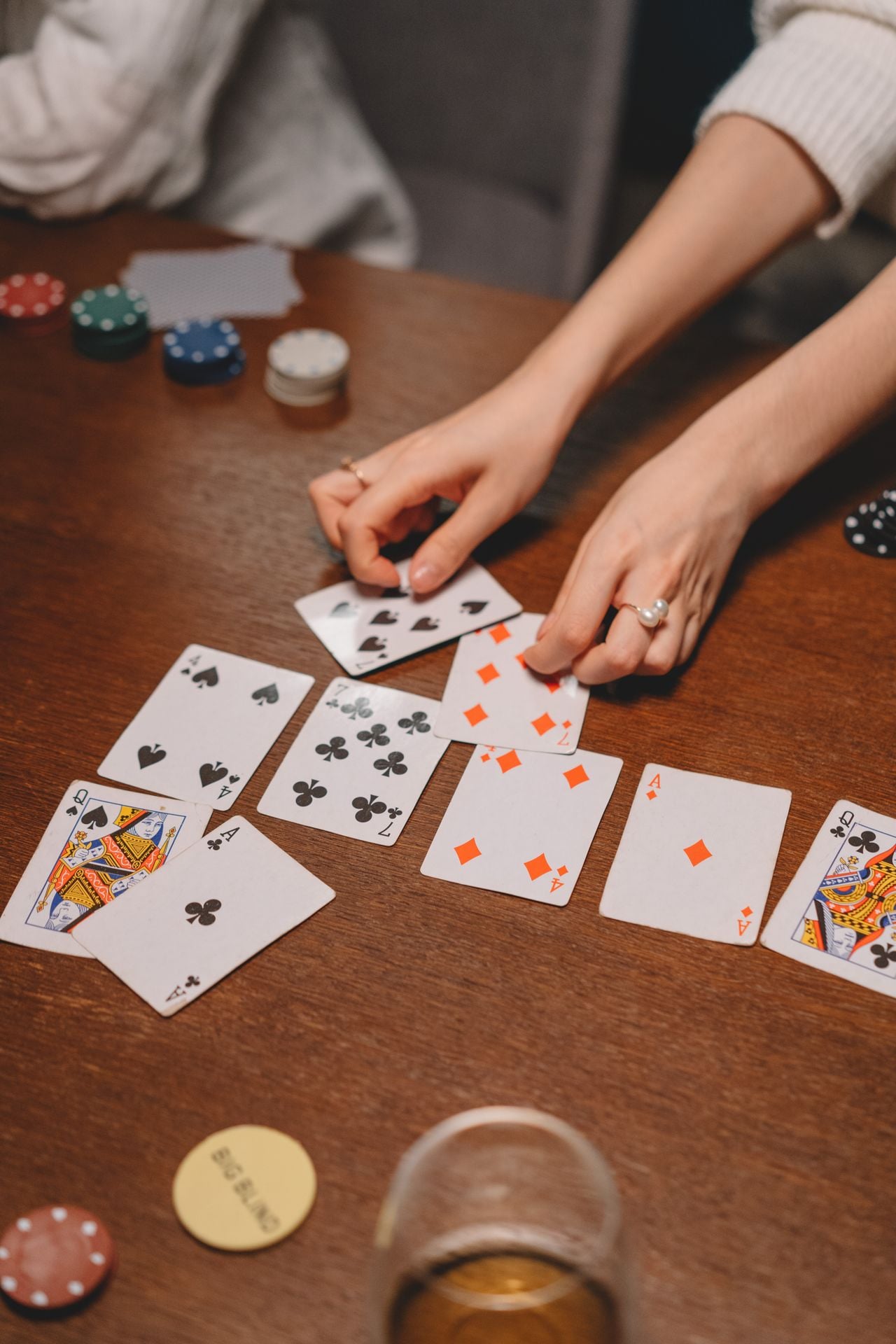
Drinking party games with a deck of cards
7. Higher or Lower
Best for: Two to six players around a small table.
Remove the jokers and shuffle a standard deck. Aces are low, followed by 2 through 10, jack, queen, and king.
Turn over one starting card. The first player predicts whether the next card will be higher or lower. Reveal it: a correct prediction earns one point; a wrong prediction gets an optional sip cue. An equal rank is a tie, with no point or cue.
The revealed card becomes the starting card for the next person. Continue clockwise until everyone has made five predictions. Highest score wins, with ties sharing the win. Reshuffle the discarded cards if the deck runs out.
8. King’s Cup: a simple house version
Best for: A group that enjoys a mix of mini challenges.
King’s Cup has plenty of variations, so display one rule sheet before playing. This version uses individual drinks, no communal drink, and no continuous-drinking rules.
Remove the jokers, shuffle the deck, and place it face down. Players draw one card at a time, clockwise.
| Card | House rule |
|---|---|
| Ace | Name an animal. Each person adds a different animal; the first repeat or five-second pause ends the challenge and gives that player an optional sip cue. |
| 2 | Name two things you’d bring to a deserted island. |
| 3 | Name three pizza toppings. |
| 4 | Everyone taps the table; the last person gets an optional sip cue. |
| 5 | Make a five-second silly pose. |
| 6 | Ask the group a “Would you rather?” question. |
| 7 | Point upward; the last person gets an optional sip cue. |
| 8 | Choose someone to name a favorite movie. |
| 9 | Start a rhyme chain. The first repeat, non-rhyme, or five-second pause gets an optional sip cue. |
| 10 | Pick a category and follow the Categories rules above for one round. |
| Jack | Choose a silly word everyone says before their next card draw. The rule expires when your next turn begins; forgetting it gives one optional sip cue. |
| Queen | Ask the next player a lighthearted question, which they may answer or pass. |
| King | Set it aside. The fourth king ends the game. |
Ties on the reaction challenges have no cue. If a prompt doesn’t suit the group, discard it and continue. There’s no overall winner in this version; the changing tasks are the game.
Cup games for a little friendly competition
9. Beer Pong
Best for: Two players or two teams of two with room for a table.
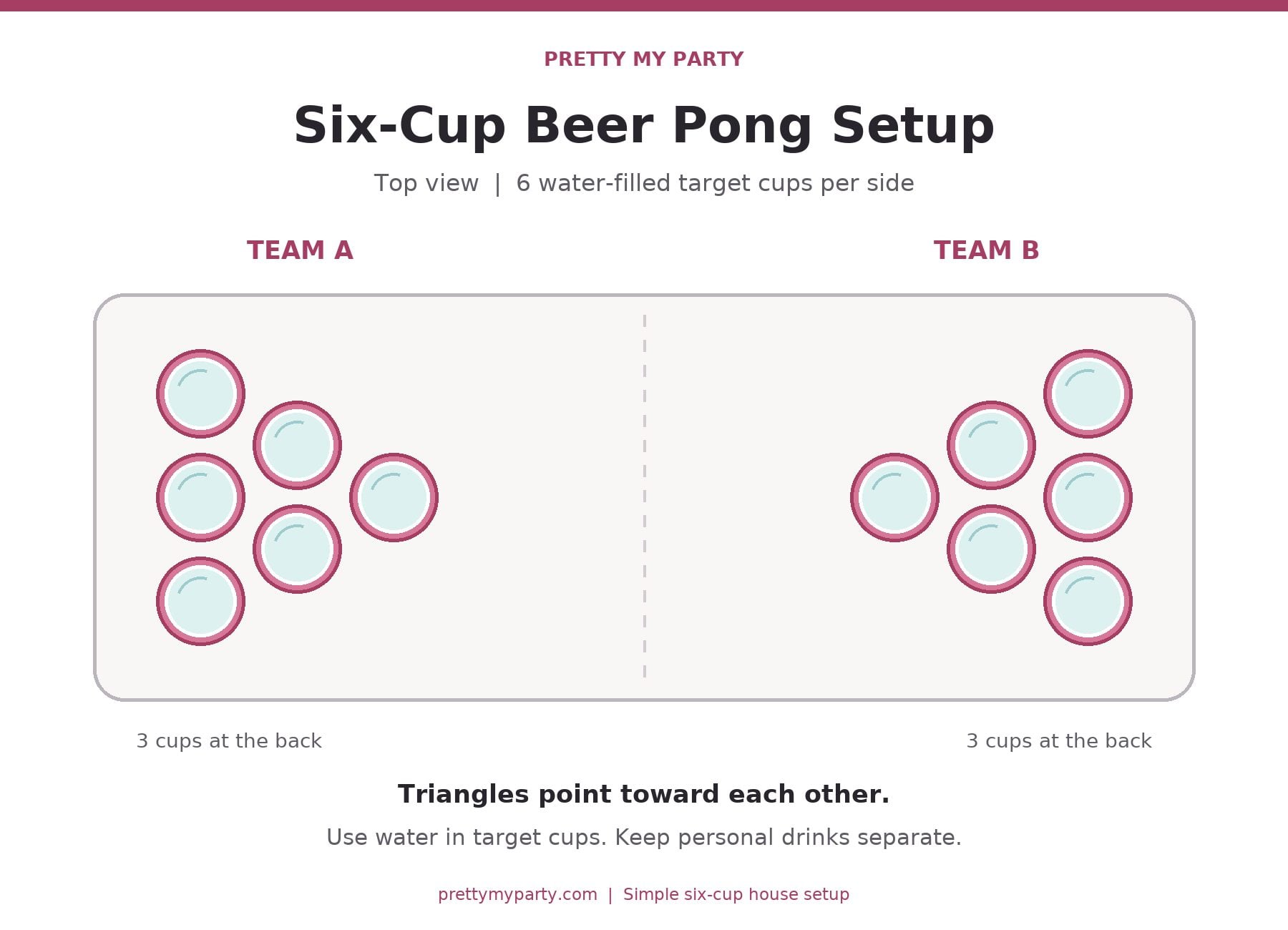
You’ll need 12 plastic cups, two ping-pong balls, and water. Put six cups in a triangle at each end of the table, with three cups at the back. Add enough water to keep them steady, and keep everyone’s personal drinks separate.
Each side gets two throws per turn. With partners, each person throws once. When a ball lands in a cup, remove that cup before the next throw.
For this simple house version, use direct throws only, with no bounce bonuses or redemption round. The first side to remove all six opposing cups wins.
At the end, players on the losing side get one optional sip cue. Drinks stay off the target table, and no one drinks the water from the game cups.
10. Flip Cup: dry-cup relay
Best for: Six to 12 players split into equal teams.
Give each player an empty plastic cup. Teams line up along opposite sides of a table.
The first person on each team places their cup upright at the edge, with a little of the base extending over it. They flick the overhanging edge to flip the cup so it lands upside down. They can reset and try again until it lands.
Once they succeed, the next teammate starts. The first team to finish wins. Play best of three; losing players get an optional sip cue after the match.
This is a dry-cup adaptation: the relay is about flipping, with drinks enjoyed separately.
I was at a college friend’s bachelorette party with 10 women; we set up Flip Cup on a 6-foot folding table with 10 plastic 16-ounce cups and about 4 feet of open space on each side. Everyone split into two teams of five.
A few guests had never played, so I demonstrated how to flip a cup and get it to land upside down. Then we tried a quick practice round.
That’s when I noticed several players started flipping before their teammates had finished. Instead of shouting instructions over the music, we clarified one rule: Your cup had to land upside down before the next person could start.
The next round moved along with fewer interruptions. The bride still needed six attempts to land her flip, but her bridesmaids cheered her through every one.
Music and guessing games for a party crowd
11. Name That Tune
Best for: Two to four teams with a mix of musical knowledge.
Choose a non-playing host and prepare 10 songs. Give each team a piece of paper and a pen.
The host plays up to 10 seconds of a song, then gives teams 15 seconds to write the title and artist. Award one point for each correct answer. Teams reveal their answers together so the quickest shouter doesn’t control the game.
After five songs, teams trailing the leader get an optional sip cue. Repeat after the final five. The highest total wins; use one extra song to break a tie.
Mix decades and genres. For more activities that pair well with a playlist, check out these party games for adults.
12. Who Said It?
Best for: A group that enjoys surprising facts without a long storytelling round.
Each person writes one true, lighthearted statement about themselves on a slip of paper and their name on the back. Fold the slips and collect them in a bowl.
A rotating reader draws a slip and reads only the statement on it, even if it’s their own. Everyone writes down a guess. The author writes a decoy name to avoid giving themselves away.
Reveal the name on the back. Correct guesses earn one point; incorrect guesses get an optional sip cue. The author isn’t scored on their own statement. Read every slip once. The highest score wins, and ties share the win.
Useful prompts include “My strangest former job was…” or “A hobby I tried and abandoned was….” Ask guests to use facts they’re happy to discuss.
13. Draw and Guess
Best for: Two teams that would rather doodle than answer personal questions.
Prepare 20 folded prompts, such as “a cat at a job interview,” “a suitcase that won’t close,” or “a birthday cake disaster.” You’ll also need paper, markers, and a 60-second timer.
One player draws a prompt while their teammates guess. No letters, numbers, speech, or gestures. A correct answer within the minute earns one point; otherwise, that team gets an optional sip cue.
Teams take turns, choosing a new person to draw each time. Play five turns per team. The highest score wins; a tie gets one additional turn per team until it’s broken.
Choose recognizable situations rather than obscure references. A questionable stick figure is enough when the idea is clear.
Drinking party game FAQs
Choose seated conversation games such as Two Truths and a Lie or Truth or Drink, provided everyone at your table wants to play. Keep the volume appropriate and ask staff before setting up equipment. Leave other patrons out of questions and challenges unless they explicitly choose to join.
No. The games above use conversation, ordinary supplies, or a prepared playlist. If you prefer a digital game, check its player limit, device requirements, and purchase terms before guests arrive. An app’s drinking prompts can still be skipped or replaced with points.
For Flip Cup, give one willing person the referee role and rotate them into the next match, so the teams stay equal. Beer Pong can rotate players between games. For music and drawing games, balance the teams as closely as possible and give both teams the same number of scored turns.
For Flip Cup, give one willing person the referee role and rotate them into the next match, so the teams stay equal. Beer Pong can rotate players between games. For music and drawing games, balance the teams as closely as possible and give both teams the same number of scored turns.
Before guests arrive, pick one game you can start immediately and one backup that uses different supplies. Put the instructions where everyone can see them, then let the group decide when it’s time to switch.
Meet the Author
Cristy Posten is a party stylist, entertaining expert, and founder of Pretty My Party. With more than a decade of experience creating, curating, and sharing party ideas, Cristy helps readers plan memorable celebrations with practical advice, creative inspiration, and real-world hosting tips. Her expertise spans birthday parties, baby showers, bridal showers, holiday entertaining, décor, and food, with a focus on making celebrations easier to plan, beautiful, and fun.
